

How To Put A Window In A Door
Synopsis: While window replacement has become a fairly standard remodeling task, it can still nowadays challenges, especially when the window being replaced is in a brick wall. In this commodity, veteran remodeling contractor Mike Sloggatt describes his procedure for this tricky project. To start, Sloggatt preps the opening, taking care with the removal of the erstwhile window. Next, he flashes the rough opening and makes sure to integrate the new wall sheathing with the existing building paper. Sloggatt'due south next footstep is to integrate the new window with the wall. First, he installs the window, using caulk and foam to air-seal and weatherize; so, he adds an extra layer of sealing for more protection. Finally, Sloggatt installs a site-built sill pan.
In the 30-plus years that I've been a remodeling contractor, I've replaced hundreds of windows. The difficulties in window replacement vary by projection, merely one thing is certain: Replacements in brick veneered homes are among the most challenging. Why? Masonry openings are difficult and expensive to alter, and integrating a new window into a home's existing weather condition bulwark is vastly more difficult when a layer of brick is in the mode.
Farther complicating matters, there are two ways to get a new window in an existing brick opening. The easier, less expensive option is a replacement window where only the sash and balance arrangement are replaced. With a full-frame replacement, the entire window, including the frame, is replaced.
Given that a replacement window is cheaper and easier to install, why choose a total-frame replacement? If the frame is rotted or insect-damaged, a total frame is generally the better approach. Also, if there's evidence of water intrusion around the window opening, a full-frame replacement lets y'all find out what'due south going on and gives you access to set up it. The window in this house, which likely dates from the 1950s, was rotted badly enough that a full-frame replacement was the only sensible way to get.
Fortunately, nearly window manufacturers at present make windows in custom sizes, and prices are affordable. You no longer have to change masonry openings or pad the hole with trim to brand a stock window fit. The simply caveat is that you'll want to double- and triple-check all relevant measurements earlier ordering the unit, considering getting the wrong size is an expensive mistake. Your window dealer or the manufacturer's website is a good place to look for guidance on proper measuring. In improver, custom window sizes may have longer atomic number 82 times than stock sizes, so enquire near delivery times when placing an order.
Here, I purposely shrunk the window so that it would fit within the existing opening with the nail fin intact. The boom fin was covered with flat stock that matched the house's other existing windows. The result was a new energy-efficient window that matched the older units in the house well.
The first stride in any window-replacement project is removing the sometime window. It's tempting to remove the old window as apace equally possible, but a go-boring arroyo means that you're less probable to impairment plaster and finishes surrounding the window. On this house, the interior plaster was installed later on the window and was keyed into the window frame. I couldn't have known this earlier I started removing the old window frame, and tearing the window apart would likely have resulted in pregnant plaster damage and a much bigger projection, college costs for the homeowner, and a headache for me.
Prep The Opening
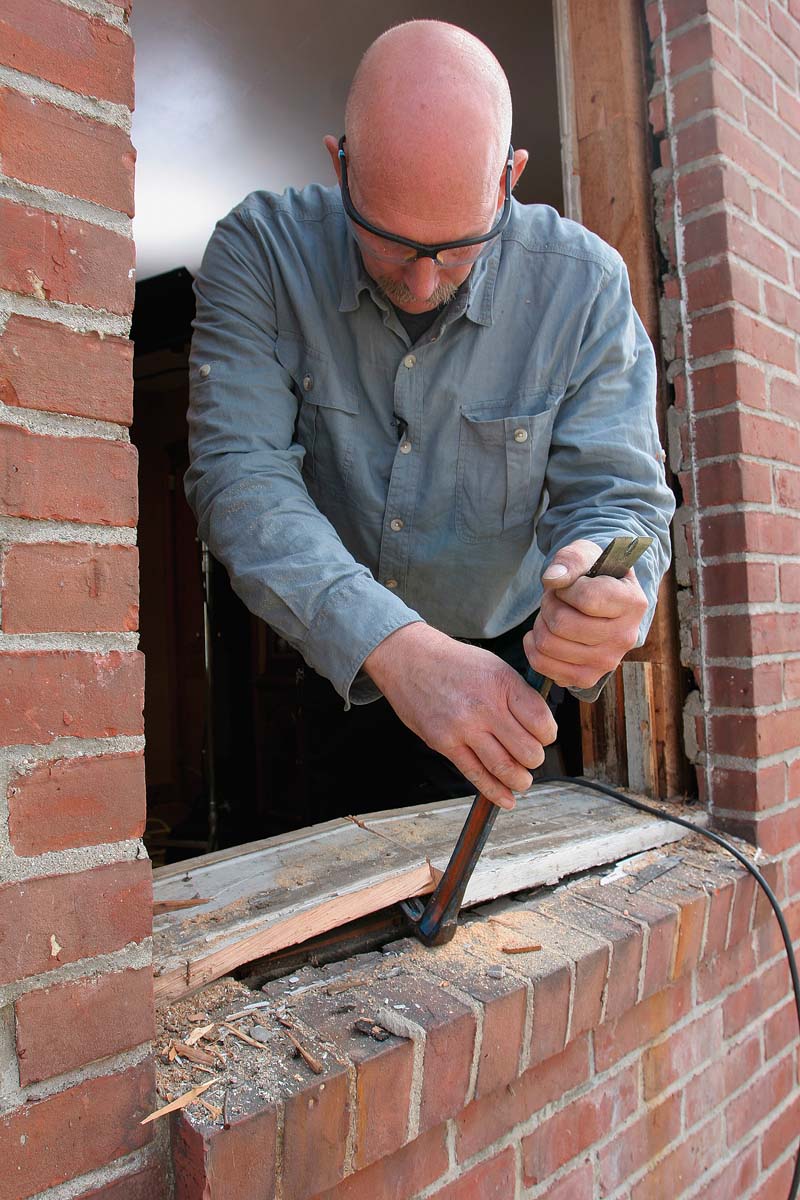
| Pull The Window Get-go by removing the sash, the balance system, and the storm windows. And so cutting the frame into pieces and gingerly pry them out. Here, the author is cutting nails that adhere pieces of 1x wall sheathing to the window frame. This pace prevents damaging the home'south existing #30 felt weather barrier when these sheathing sections are removed. | Call up Surgically Employ extra care when pulling the one-time window frame and so that you don't damage existing plaster or drywall. On this house, the plaster is keyed into the window frame, so the author cuts the frame into sections and pulls out the sections ane at a fourth dimension. |
 |  |
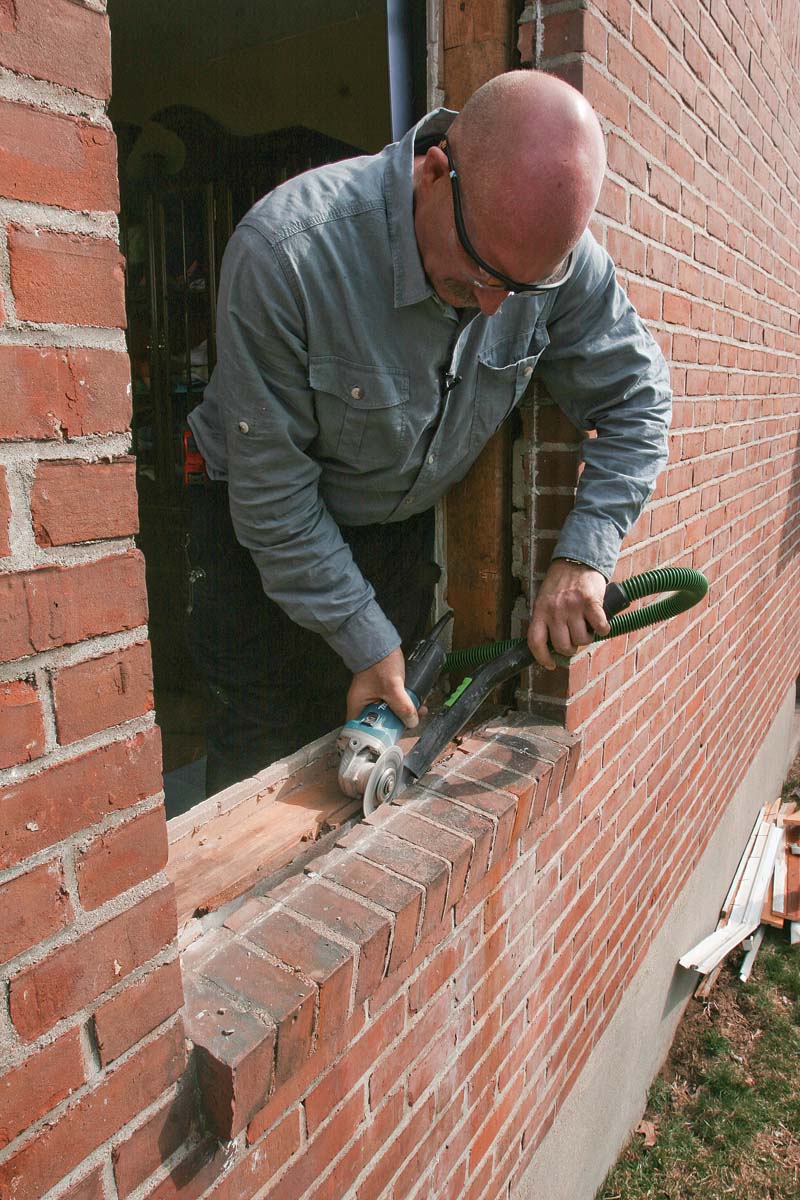
| Betrayal The Weather Barrier The most important office of replacing a window is integrating the new window with the existing felt or firmwrap. Unfortunately, masonry openings oft have chunks of mortar around the opening that must be removed before yous tin integrate the new flashing materials. Use an angle grinder and a chisel to remove the mortar without cutting or tearing the edifice paper. | Establish A Rough Opening A combination of 1x and 2x lumber is used to shrink the framing to match the window'southward specified rough opening. The smaller opening allows the window'due south nailing flange to fit within the masonry. Leaving the nailing flange intact makes flashing the window easier and maintains the manufacturer's warranty. |
 |  |
Flash The Rough Opening
Integrate new wall sheathing with existing building paper
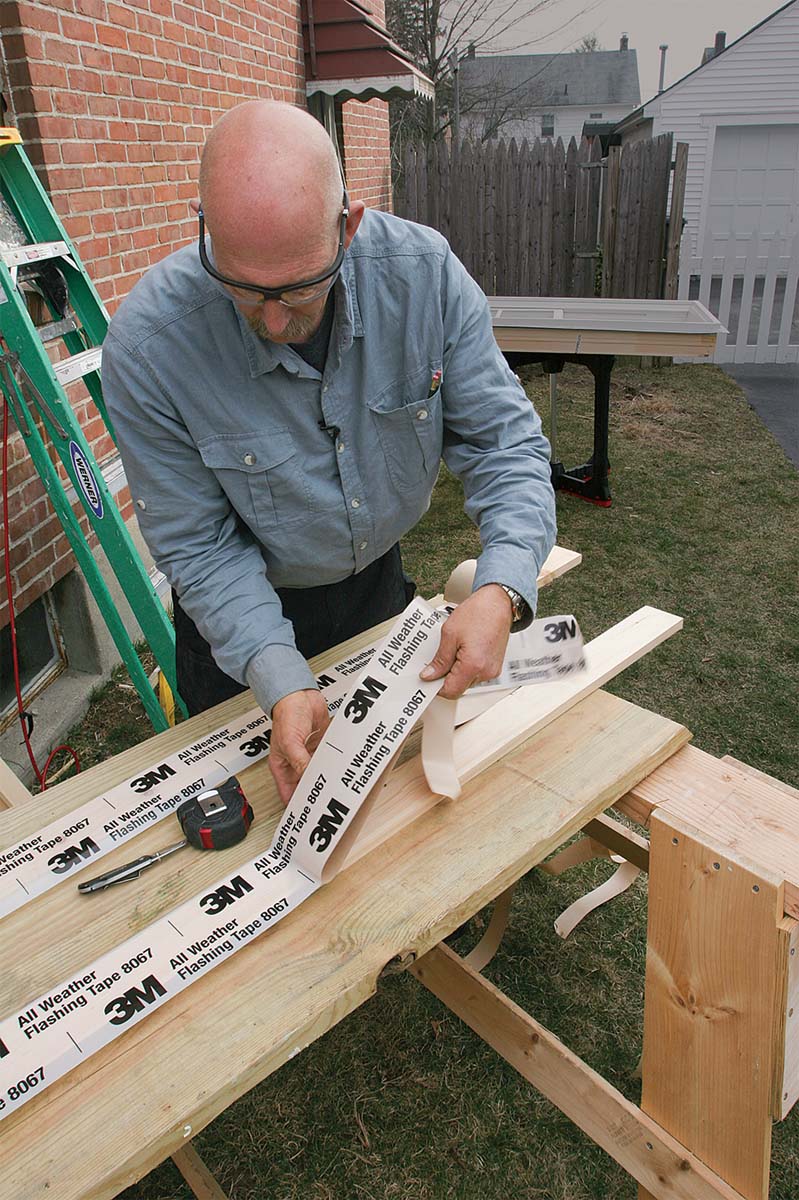
| Wrap The Sheathing Considering there's no room backside the brick veneer to utilise a atmospheric condition barrier over the sheathing patches, the author covers the patches with a sparse self-stick flashing tape before installing them. | Slip In The Sheathing Made from three ⁄ 4 -in. stock, the sheathing patches effectually the new opening are coaxed backside the existing weather barrier with a 12-in. drywall pocketknife. The knife helps to concur back the old felt while the patches are pushed in behind it. |
 | 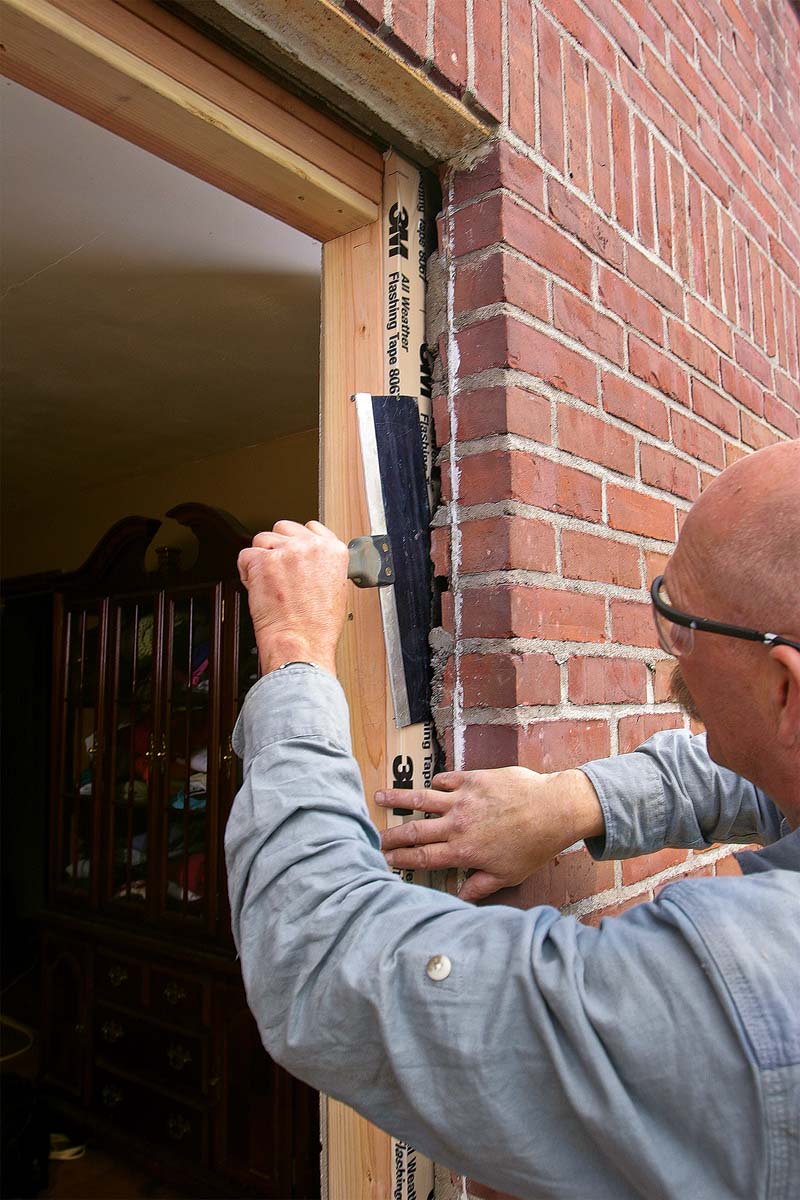 |
| Leave A Flap At The Top The sheathing patch at the top of the opening has an extra flap of flashing record. The release newspaper is left on the flap and then that the window'south top flange and head casing can be tucked under the flap, integrating them into the firm's drainage plane. |  |
Create a site-congenital sill pan
| Extend The Atmospheric condition Barrier Aluminum flashing extends the weather-resistive barrier upwards to the new subsill. The flashing is lapped over the existing felt and is tacked in place with aluminum trim nails. The loose flap of flashing tape in the corners of the opening will eventually lap over a sill-pan flashing. | Create A Back Dam A dorsum dam prevents infiltrated water from getting inside the house. A piece of vinyl wall edging (commonly used to protect wall-papered outside corners) makes a nifty low-contour back dam. It'south temporarily held in place with flashing tape until it can be covered with the flexible sill-pan flashing. |
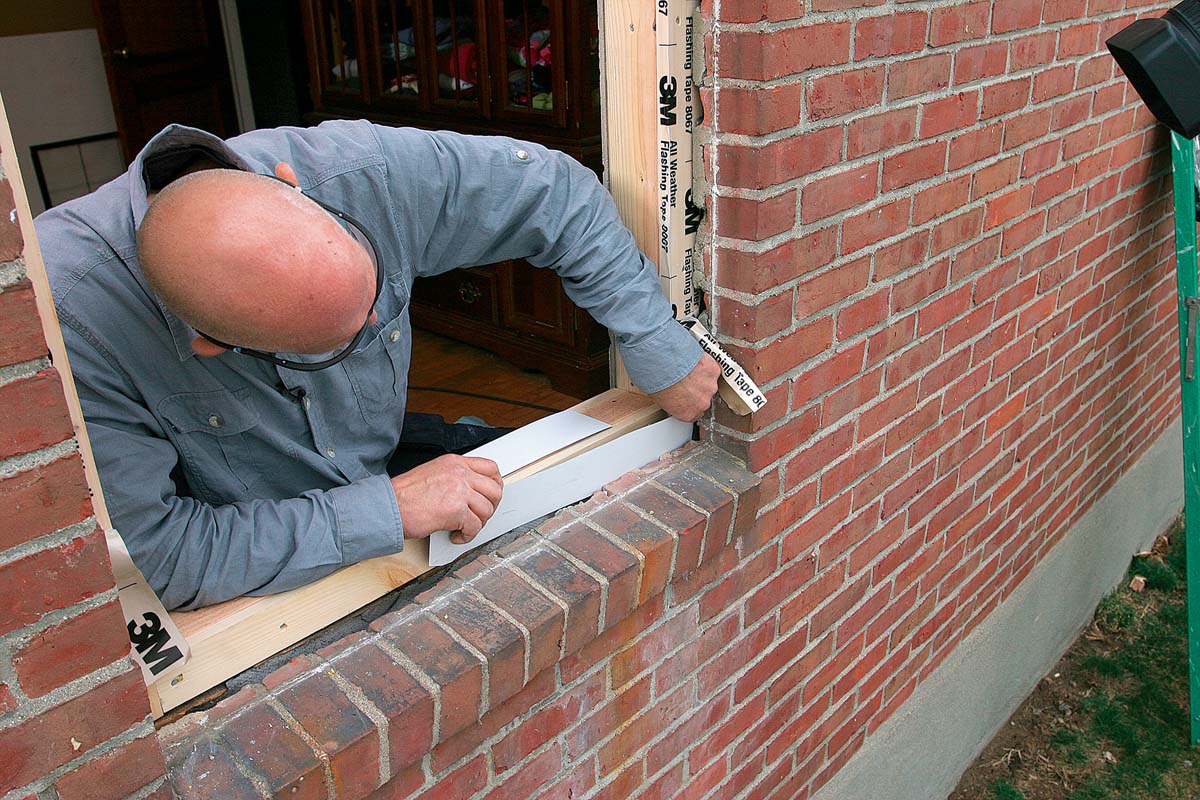 | 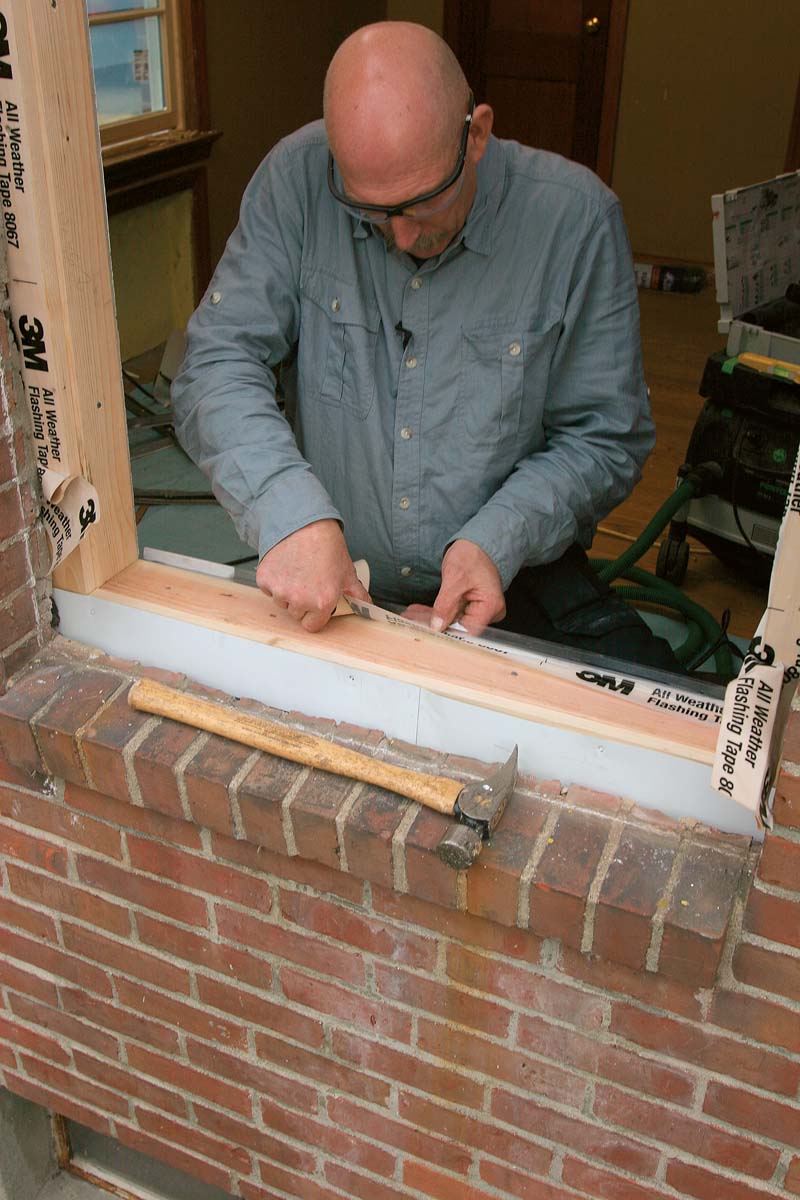 |
| Sill Pan Stops H2o After removing the release paper, the author advisedly lays in a piece of DuPont FlexWrap as a sill-pan flashing. Where the sill meets the jack studs, he makes sure the flashing corners are pressed firmly to the opening and then that they class a tight 90° corner. Otherwise, the window frame can cut through the pan flashing when the window is pushed into the opening. | Add A Tempest Flap To forbid current of air-driven rain from getting under the window and backside the brick, information technology's a adept thought to install a storm flap on top of the brick sill. This piece of foil-faced, cocky-adhesive flashing will be trimmed affluent later. Although it's a good thought everywhere, this detail is especially important on 2nd-story windows because the condition (or even the beingness) of the weather-resistive barrier below the window can't be known. |
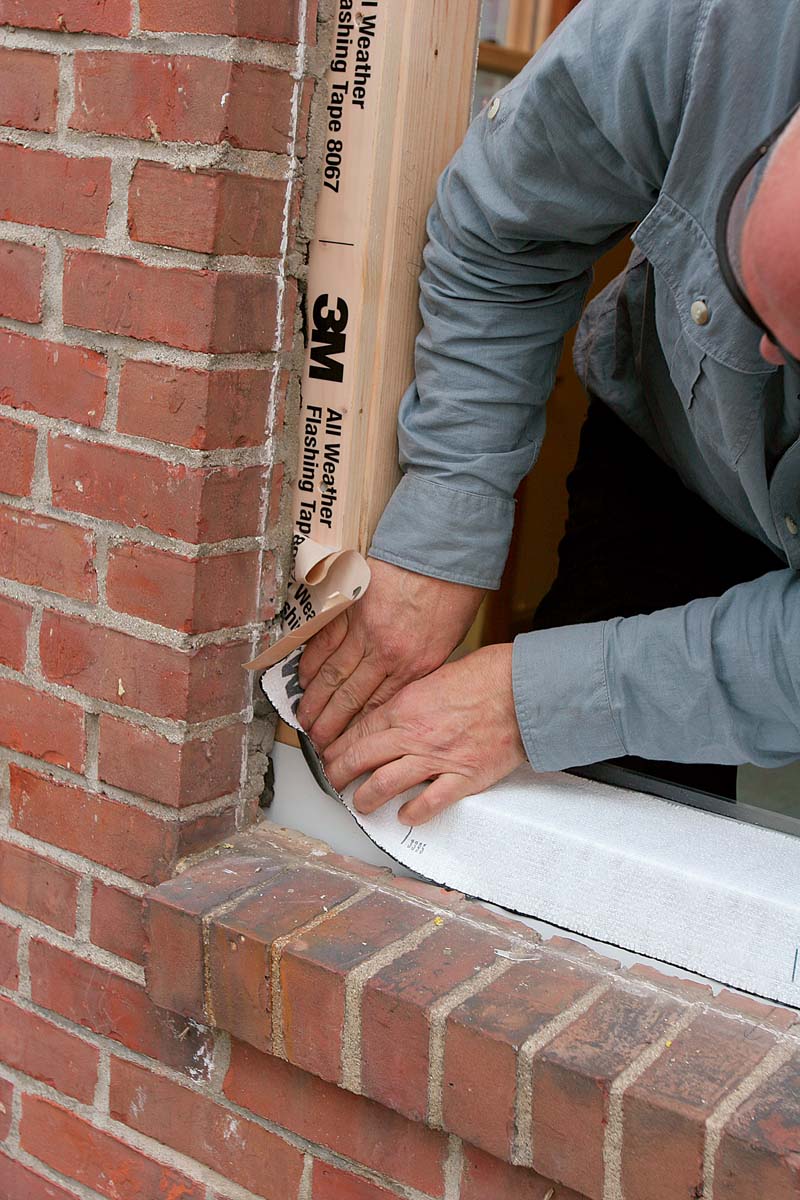 | 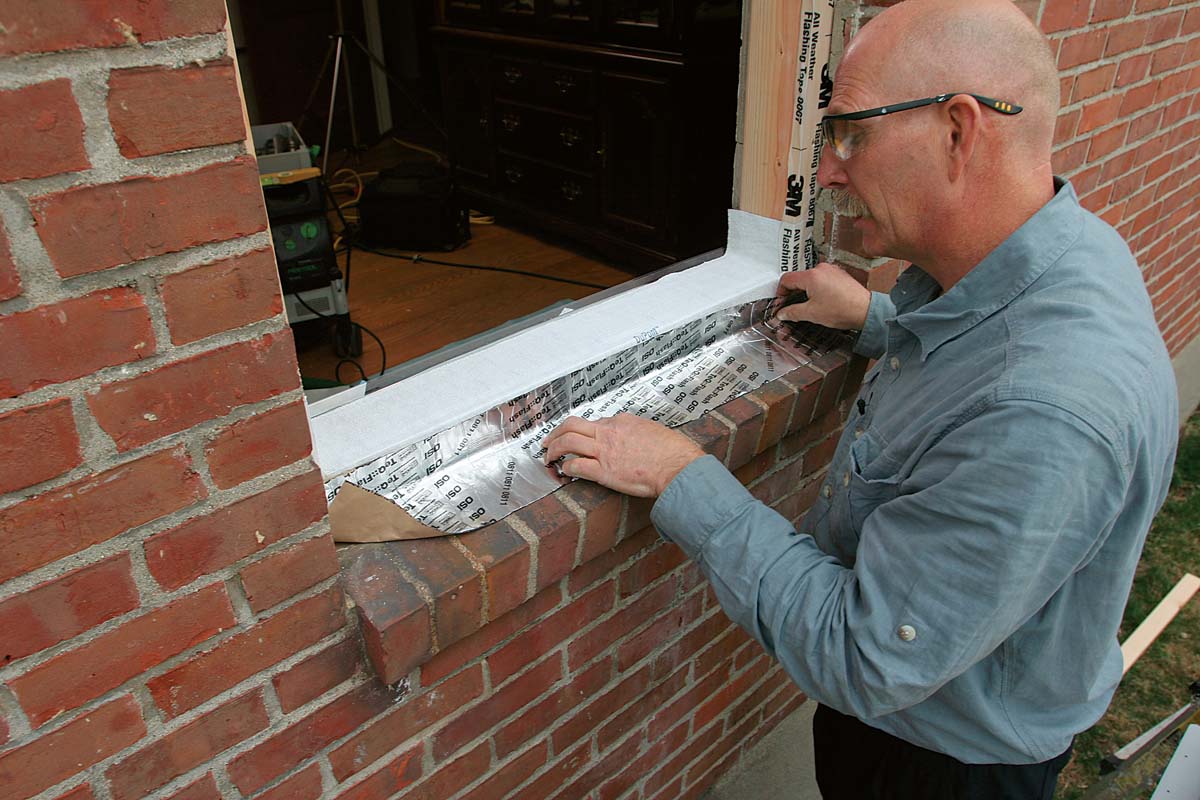 |
Install the window
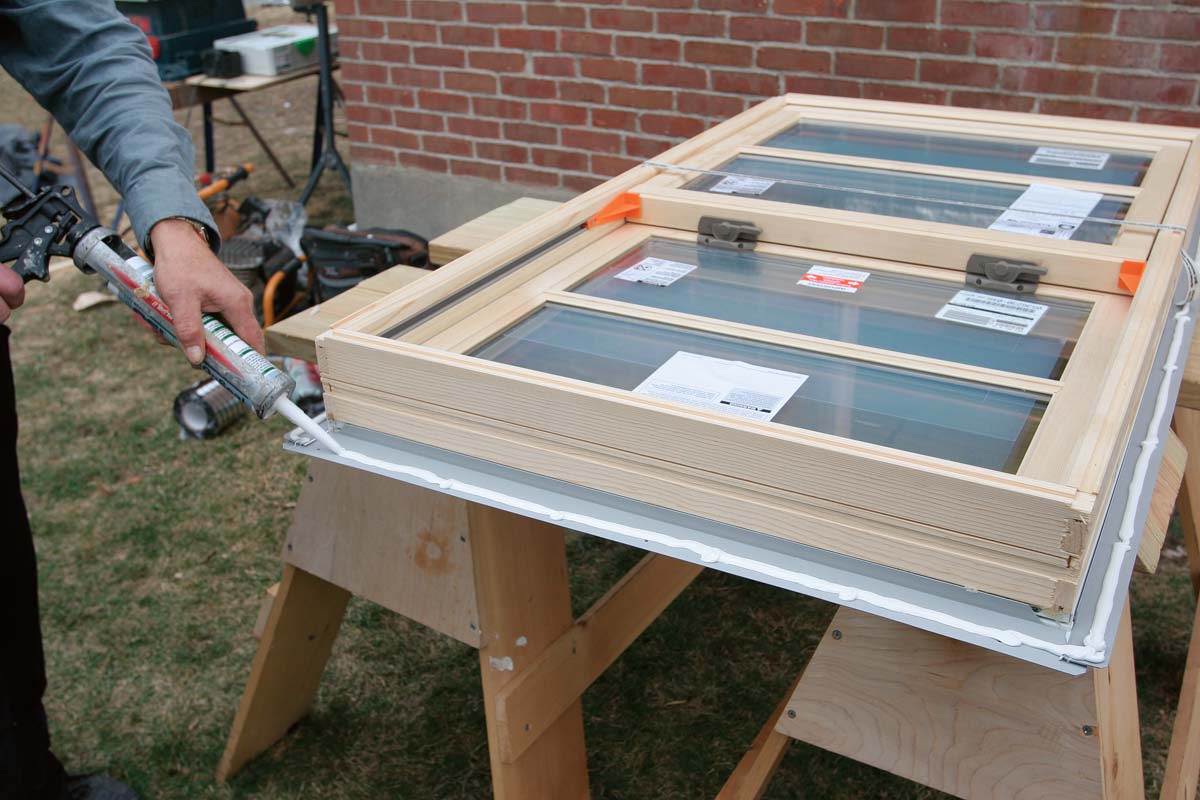
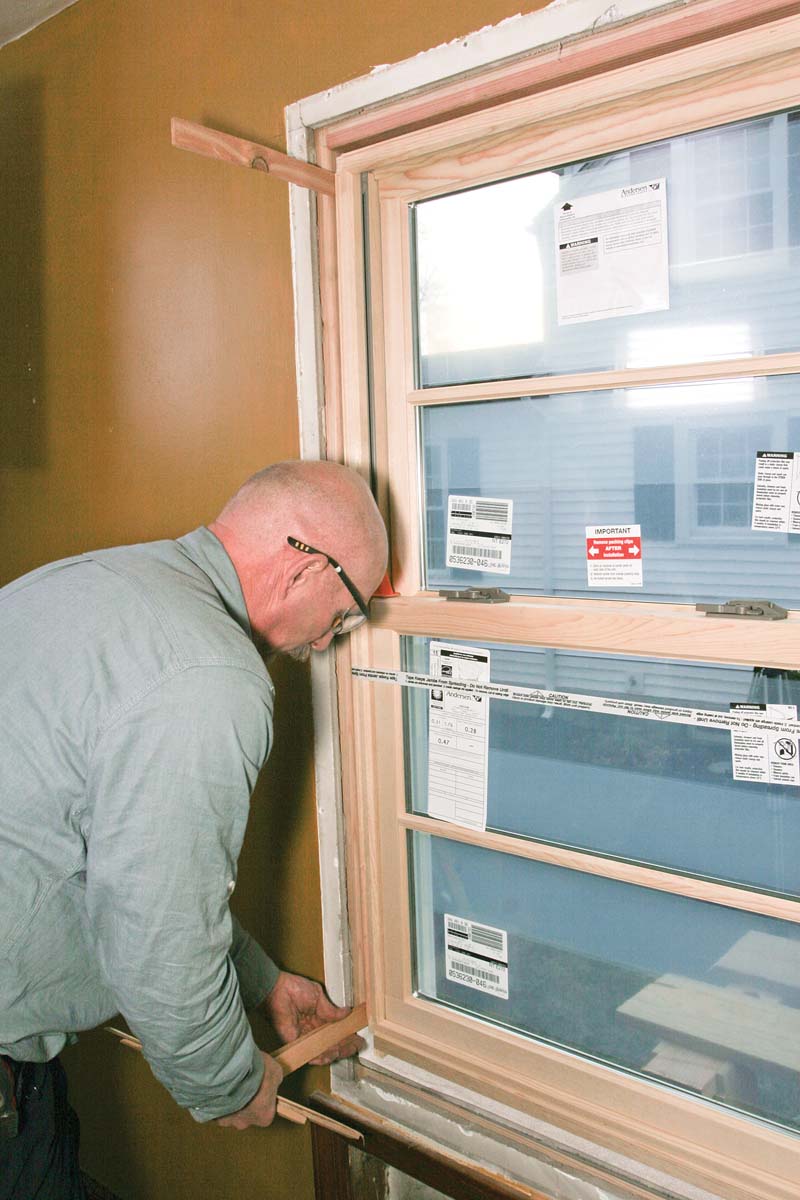
| Caulk The Nailing Flange The author puts a heavy dewdrop of sealant on the window's side and top nailing flanges. The bottom is left uncaulked so that whatsoever infiltrated h2o tin can bleed out. It's important that the flashing and the sealants are compatible considering some solvent-based sealants assault some flashing tapes. With the frame resting on the rough sill and centered in the rough opening, tilt the window slowly into place. With the window centered in the opening, apply two 1 1 ⁄ 4 -in. pan-head screws to secure the nailing flange. | Shim The Jambs It's important to shim the frame straight before fully fastening the nailing flange on the exterior; otherwise, the window won't operate smoothly. In one case the unit is shimmed, finish fastening the nailing flange—every pigsty for loftier-wind zones, every other hole elsewhere. |
 |  |
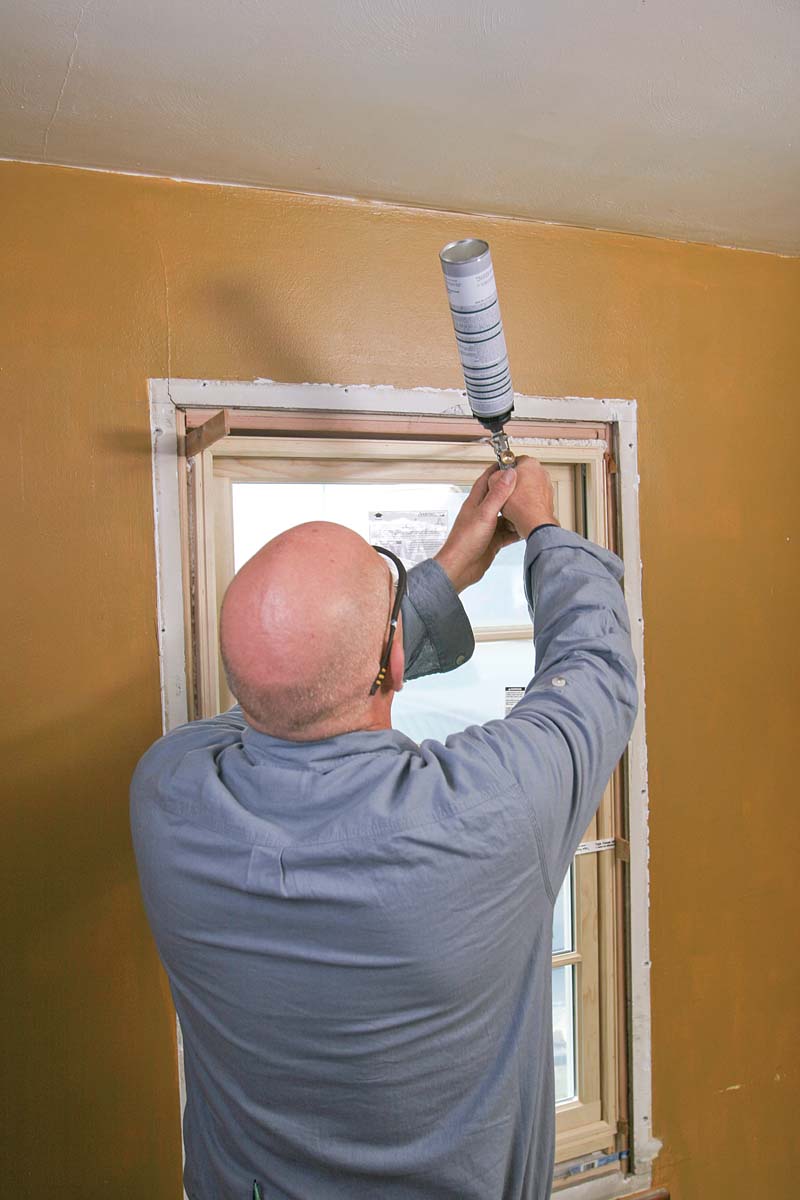
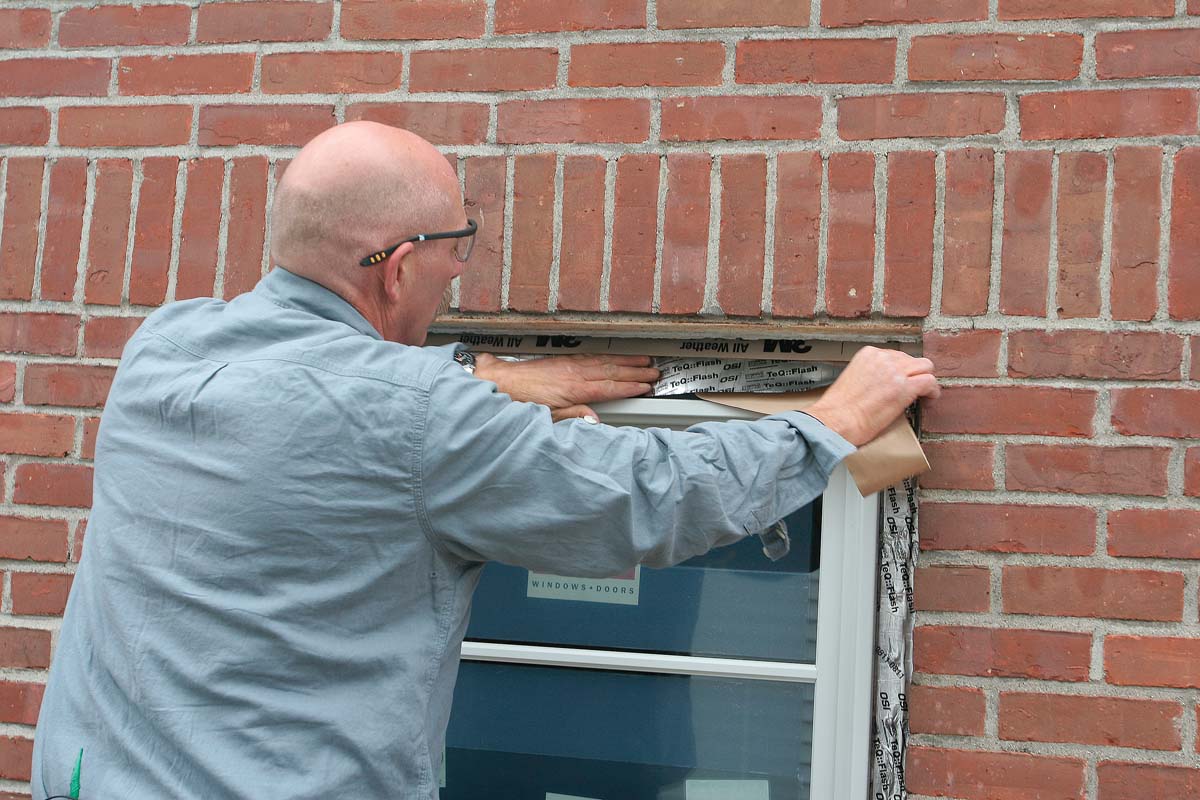
| Foam The Gap Minimally expanding window-and-door cream is used to seal the gap between the window frame and the rough opening. At the bottom, the writer fills merely an inch or so along the interior side of the opening. The single dewdrop of cream stops air without trapping water. | Flash The Flange Cover the side flanges and so the top flange with foil-faced flashing tape. The foil tape'due south adhesive is less tenacious, so it's easier to tuck the tape behind the brick. Tuck its top edge under the flap created with the first layer of flashing record applied to the sheathing patches. |
 |  |
Extra sealing for extra insurance
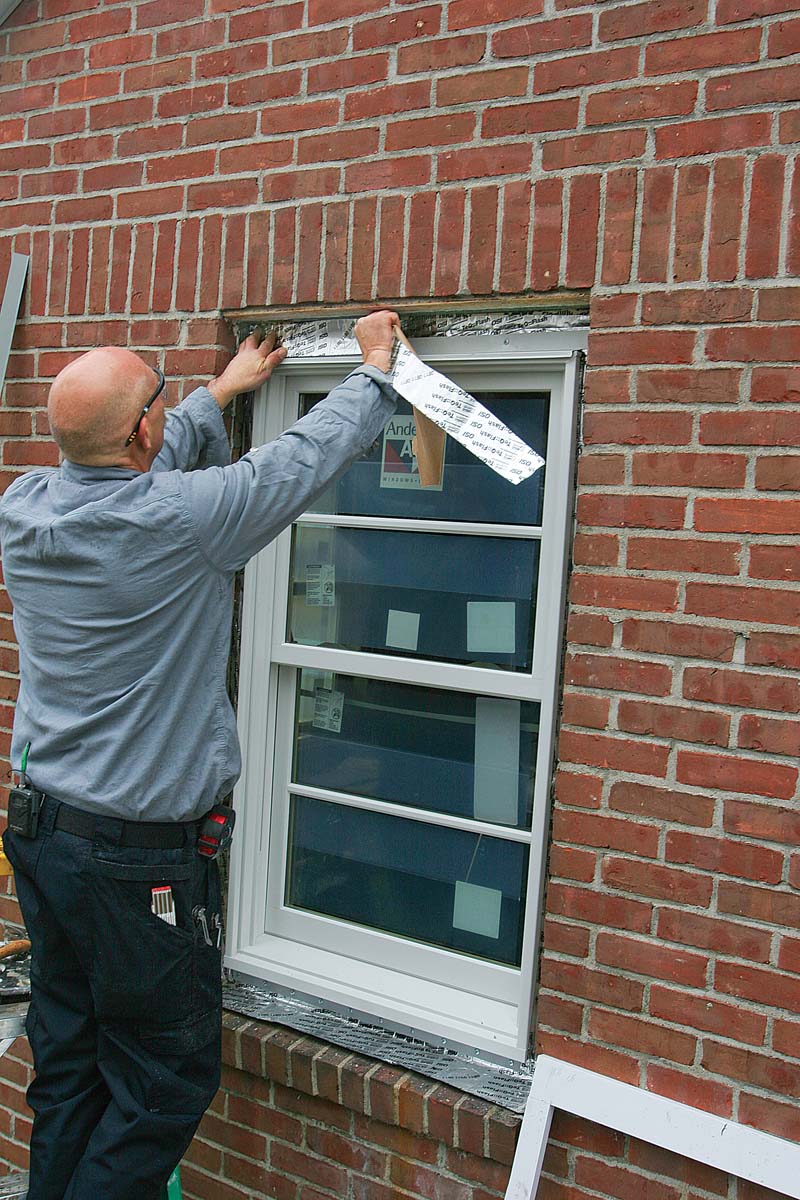
| Embrace The Drip Cap A layer of foil flashing tape installed over the head flashing integrates the head flashing into the drainage aeroplane. The peak edge of the cocky-adhesive flashing is tucked under the flap left in the weather-barrier record that covers the sheathing patch. | Slip In A Head Flashing An Fifty-shaped flashing bent with a metal brake sheds water over the casing. Its vertical leg is tucked nether the flap left in the weather-barrier record that also shields the foil tape over the head flashing. Friction holds information technology while the casing is fit below. |
 |  |
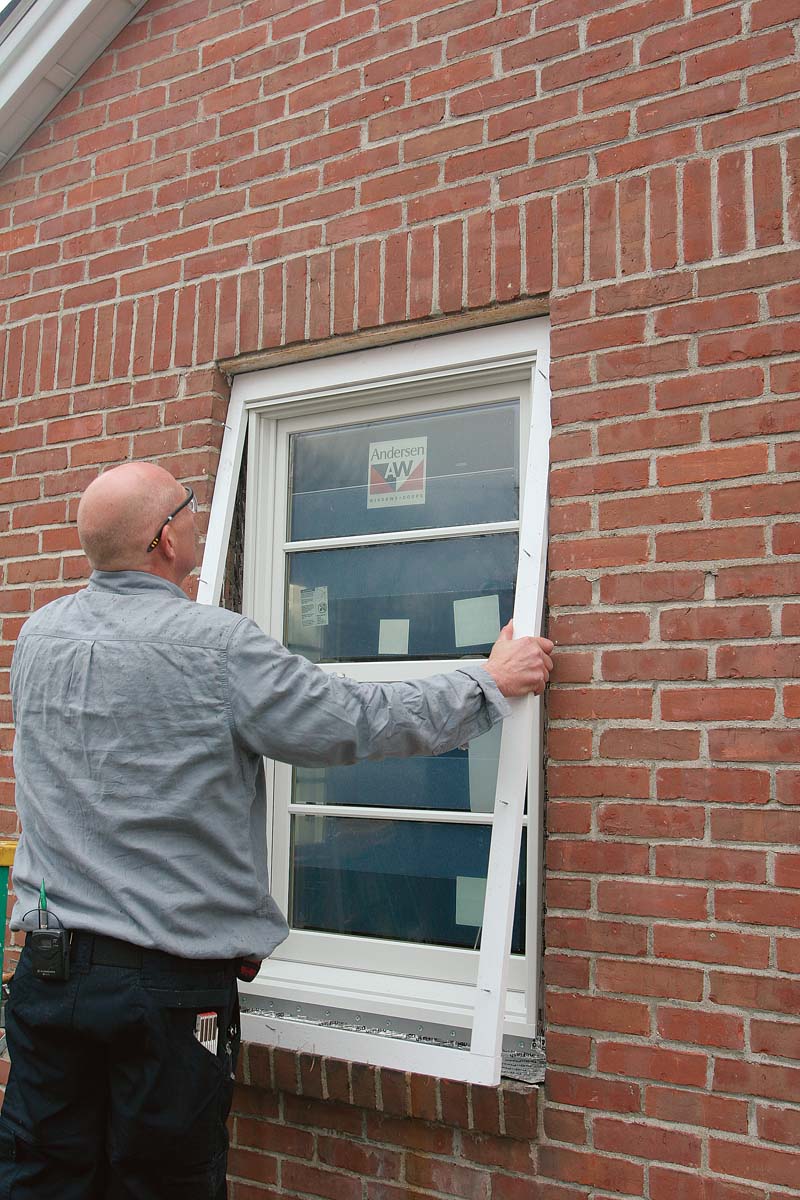
| Install The Casing Fabricated from cellular PVC, the site-assembled casing has corners secured with pocket screws. To make installation easier, the stainless-steel trim-head screws are started in the stock. The casing is 1 ⁄ 4 in. undersize to let for a 1 ⁄ eight -in. caulk joint around the perimeter. | Seal And Trim The Tempest Flap Sealant under the storm flap keeps it in identify and prevents wind-driven water from getting underneath. The flap is extra insurance against h2o infiltration and preserves the gratis-draining attributes of the other flashing materials. |
 |  |
| Caulk The Trim The final step is to caulk the casing to the window frame and the brick veneer with window-and-door sealant. The gap above the head casing and weep holes at the bottom remain uncaulked, allowing infiltrated water to drain out. | 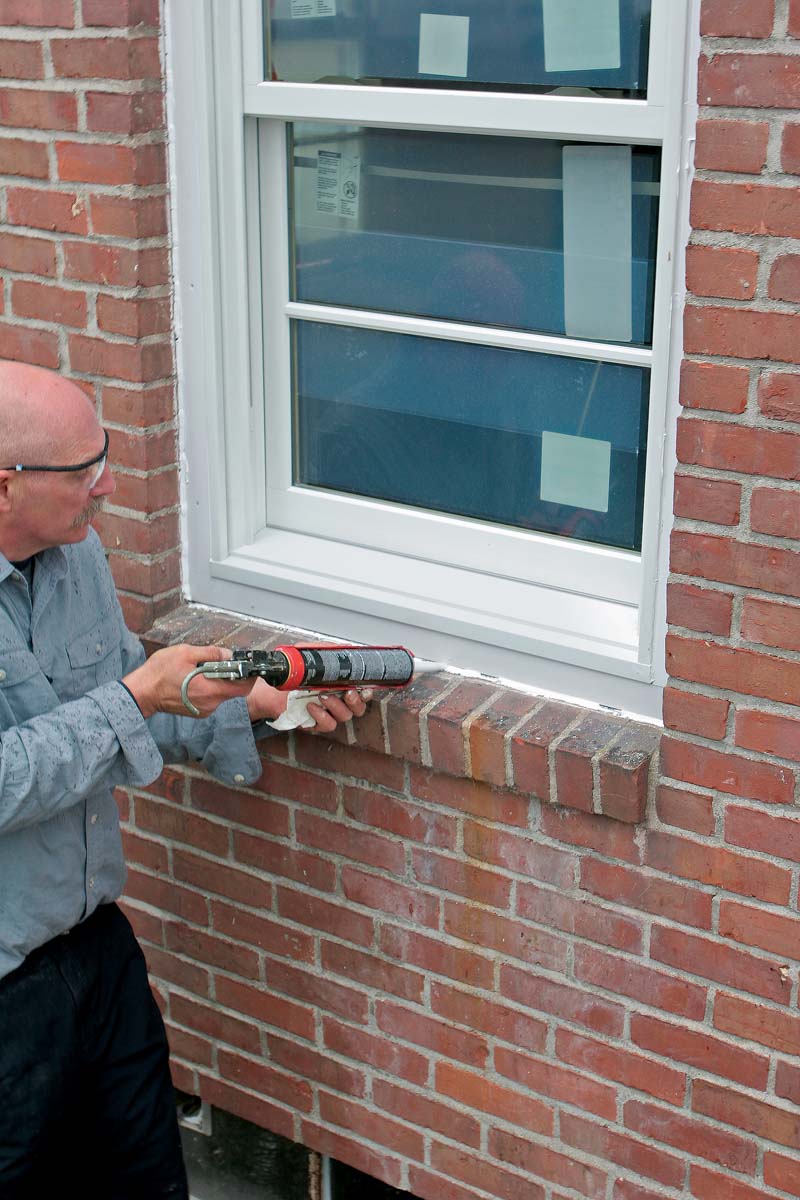 |
For more photos and details on window replacements in brick veneered homes, click the View PDF push below.
Source: https://www.finehomebuilding.com/project-guides/windows-doors/new-window-in-a-brick-house
Posted by: worshammarithere.blogspot.com
0 Response to "How To Put A Window In A Door"
Post a Comment